Timothy vs oaten vs grass hay: at a glance
Every box is checked and packed by our family. The difference is in the plant.
| Compare |
 |
 |
 |
 |
 |
 |
|---|---|---|---|---|---|---|
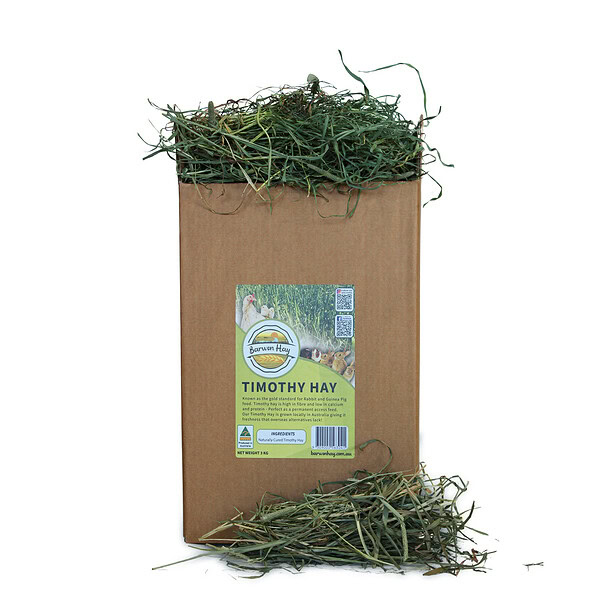
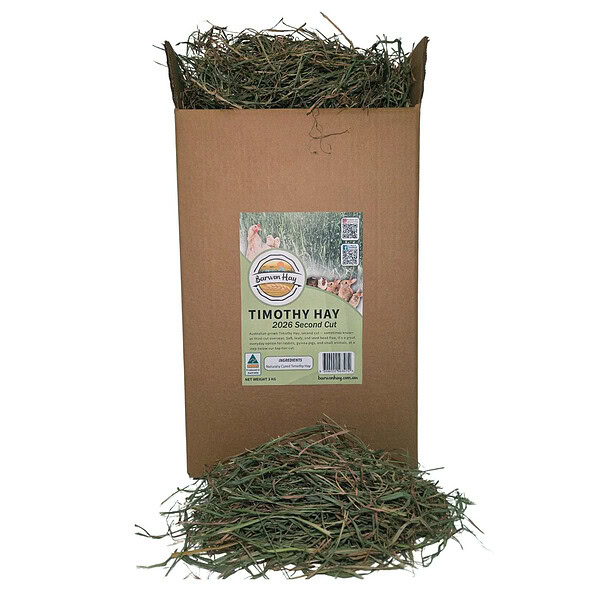
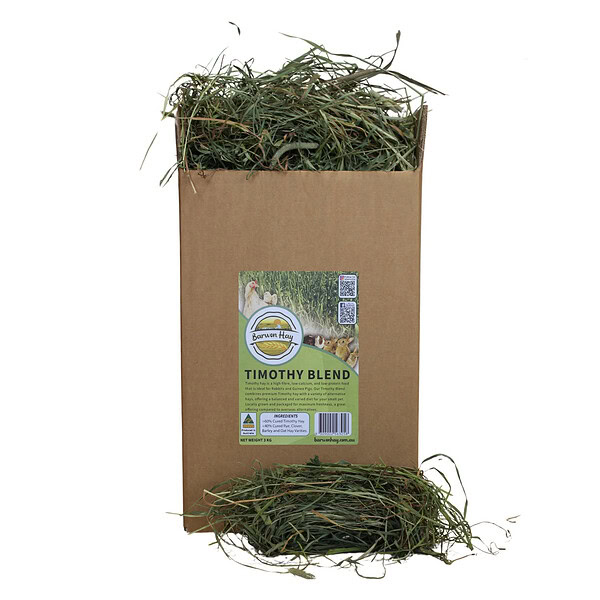
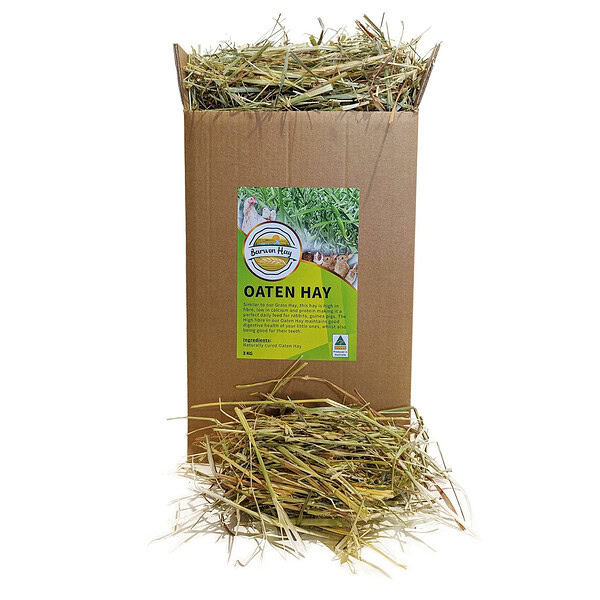
| What it is | Timothy grass, first cut | Timothy grass, second cut | Over 80% Timothy, with barley grass, oats, ryegrass and clover | The oat plant, cut for hay | Ryegrass | Lucerne, a legume rather than a grass |
| In a line | The everyday hay for adult rabbits and guinea pigs | A softer, leafier Timothy | Mostly Timothy, with other paddock grasses for variety | Sweet and crunchy | Everyday ryegrass, a Timothy alternative | For babies under 6 months and nursing mums |
| Feel | Long strands, firm stems, plenty to chew | Soft and leafy, with a finer texture | Soft, with a mix of textures | Thick, crunchy stems | Long green strands, similar to Timothy | Soft, clover-like leaves on crunchy stems |
| Taste and smell | Plain rather than sweet | Plain rather than sweet | Fresh and slightly sweet | The sweet one | Sweet, earthy smell | Sweet, distinct smell |
| Nutrition | High fibre, low calcium | High fibre, low calcium | High fibre, low calcium | High fibre, low to medium protein, low calcium | High fibre, low to medium protein, low calcium | High protein and calcium, medium fibre |
| Popular with | Owners who want the hay most people ask for by name | Fussy or older pets | Pets that like variety | Fussy eaters with a sweet tooth | Big eaters and multi-pet homes | Growing babies and nursing mums |
| Feed it as | Everyday hay | Everyday hay | Everyday hay | Everyday hay | Everyday hay | Everyday for babies and nursing mums. A treat for adults |
| Good to know | The hardest of our hays to grow, which is why it costs more | No seed heads. Close to what the USA calls third cut | Baled just as it grows, so every box is a little different | Our cost-effective alternative to Timothy | Over 90% ryegrass, the rest is clover | Keep a grass hay available alongside it |
| Reviews | 4.8/5 from 148 reviews | 4.8/5 from 33 reviews | 5.0/5 from 5 reviews | 4.7/5 from 166 reviews | 4.7/5 from 118 reviews | 4.7/5 from 27 reviews |
| Price | $91.993kg (Box), delivered | $64.993kg (Box), delivered | $79.993kg (Box), delivered | $46.993kg (Box), delivered | $46.993kg (Box), delivered | $46.993kg (Box), delivered |
| Buy | Shop Timothy More about Timothy | Shop Second Cut More about Second Cut | Shop Blend More about Blend | Shop Oaten More about Oaten | Shop Grass More about Grass | Shop Alfalfa More about Alfalfa |
Timothy Hay
The everyday hay for adult rabbits and guinea pigs.
- What it is
- Timothy grass, first cut
- Feel
- Long strands, firm stems, plenty to chew
- Taste and smell
- Plain rather than sweet
- Feed it as
- Everyday hay
- Reviews
- 4.8/5 from 148 reviews
Timothy Second Cut
A softer, leafier Timothy.
- What it is
- Timothy grass, second cut
- Feel
- Soft and leafy, with a finer texture
- Taste and smell
- Plain rather than sweet
- Feed it as
- Everyday hay
- Reviews
- 4.8/5 from 33 reviews
Timothy Blend
Mostly Timothy, with other paddock grasses for variety.
- What it is
- Over 80% Timothy, with barley grass, oats, ryegrass and clover
- Feel
- Soft, with a mix of textures
- Taste and smell
- Fresh and slightly sweet
- Feed it as
- Everyday hay
- Reviews
- 5.0/5 from 5 reviews
Oaten Hay
Sweet and crunchy.
- What it is
- The oat plant, cut for hay
- Feel
- Thick, crunchy stems
- Taste and smell
- The sweet one
- Feed it as
- Everyday hay
- Reviews
- 4.7/5 from 166 reviews
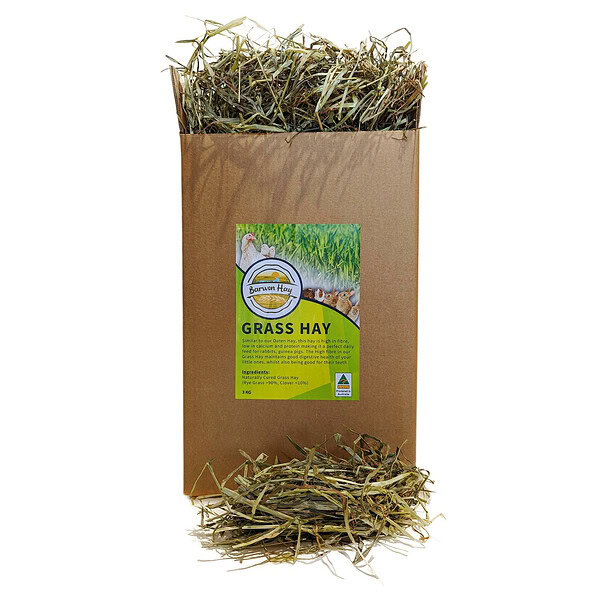
Grass Hay
Everyday ryegrass, a Timothy alternative.
- What it is
- Ryegrass
- Feel
- Long green strands, similar to Timothy
- Taste and smell
- Sweet, earthy smell
- Feed it as
- Everyday hay
- Reviews
- 4.7/5 from 118 reviews
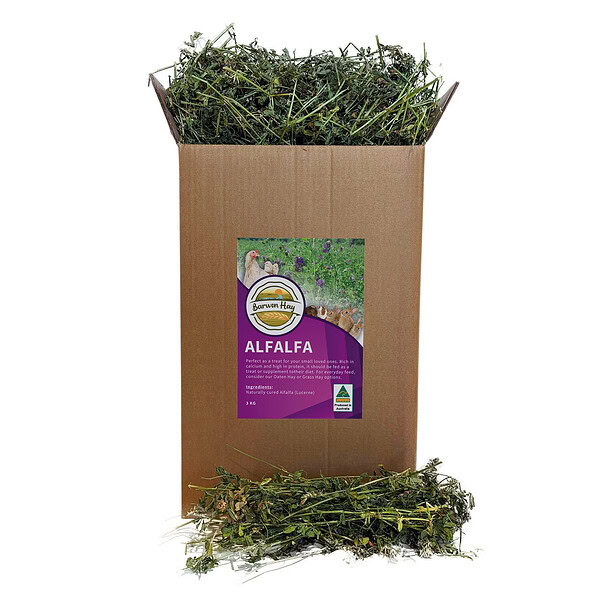
Alfalfa Hay (Lucerne)
For babies under 6 months and nursing mums.
- What it is
- Lucerne, a legume rather than a grass
- Feel
- Soft, clover-like leaves on crunchy stems
- Taste and smell
- Sweet, distinct smell
- Feed it as
- Everyday for babies and nursing mums. A treat for adults
- Reviews
- 4.7/5 from 27 reviews
What should rabbits and guinea pigs eat?
Mostly hay. The RSPCA’s guide for rabbits is about 80% hay, 15% leafy greens and vegetables, and 5% pellets.
Guinea pigs are much the same: the RSPCA says grass hay should be most of what they eat. The big difference is vitamin C. Guinea pigs can’t make their own, so they need it from fresh greens and vegetables every day.
What about carrots?
Only cartoon rabbits live on them. Carrots and fruit are high in sugar, so the RSPCA lists them as a treat. Leafy greens are the everyday vegetable.
Figures from the RSPCA Knowledgebase pages on feeding rabbits and feeding guinea pigs, which also list safe greens.
Timothy hay: the everyday standard
Timothy is the hay most rabbit and guinea pig owners ask for by name. It has long strands and firm stems, so there’s plenty to chew, and it’s a plain hay made for eating every day.
It’s high in fibre and naturally low in calcium, which is why it’s the hay to keep topped up all day. Ours comes as long, whole strands. We don’t chop it or chaff it, so your pet gets proper stems to work through.
We grow it under irrigation on our farm near Geelong and pack it in small batches, so it isn’t sitting in a warehouse for months. Customers tell us it smells fresh and grassy and isn’t dusty.
First cut vs second cut Timothy
Our standard Timothy Hay is first cut. It’s the stalkier of the two, with firmer stems and longer strands. Second Cut is a softer, leafier cut with no seed heads and a finer texture. It’s close to what’s sold as third-cut Timothy in the USA.
It’s still 100% Timothy, so it’s high in fibre and low in calcium like the standard cut. The difference is in the eating: pets that pick around coarse stalks, and older pets that find them hard going, tend to do better on Second Cut.
Because it’s a seasonal cut, it varies a little from year to year. Some natural brown leaf through it is normal.
Timothy Blend: a natural paddock mix
Our Blend comes from the part of the paddock where other grasses grow in among the Timothy. We cut and bale it just as it grows, so nothing is mixed in afterwards. It’s more than 80% Timothy, with barley grass, oats, ryegrass and clover through it. Because nothing is blended to a recipe, every box is a little different.
Think of it as a Timothy-rich meadow hay. Your pet gets a few different tastes and textures to forage through in every handful, with Timothy still doing most of the work. Customers describe it as soft, with a fresh, slightly sweet smell.
Like our straight Timothy it’s high in fibre and low in calcium, and it costs less.
Oaten hay: sweet and crunchy
Oaten hay is the oat plant cut for hay. The stems are thicker and crunchier than Timothy, and it’s the sweeter of the two, which is why fussy eaters often go for it.
Nutritionally it sits close to Timothy and ryegrass: high in fibre, low to medium in protein and low in calcium. That makes it an everyday hay, not a treat.
We grow it as the cost-effective alternative to Timothy. It’s cut in November or December, and we try to grow it on rainfall alone. Every bale is checked before packing and only goes in a box if it’s fresh and smells sweet.
Grass hay: an everyday Timothy alternative
Our Grass Hay is ryegrass, with a little clover through it. It has long, green strands and a sweet, earthy smell, and it feels much like our Timothy in the hand. It isn’t as soft as Second Cut.
Its nutritional profile is similar to Timothy: high in fibre, low to medium in protein and low in calcium. So it works as an everyday hay, and as a lower-priced alternative to Timothy.
Along with oaten, it’s our lowest-priced everyday hay, which makes it a good fit for big eaters and homes with a few pets.
Alfalfa hay (lucerne): for babies and nursing mums
Alfalfa, also called lucerne, is a legume, not a grass. It has soft, clover-like leaves on crunchy stems and a sweet, distinct smell that most pets go straight for.
It’s higher in protein and calcium than grass hay. That extra is what growing, pregnant and nursing animals need, so it’s the one for pets under 6 months and nursing mums.
For adults it’s a treat. The RSPCA suggests lucerne in small amounts only, so keep one of our grass hays available as the everyday hay and add a handful of alfalfa now and then.
Timothy vs oaten hay: what’s the difference?
They’re different plants. Timothy is a grass with long strands and firm stems, and it tastes plain. Oaten hay is the oat plant cut for hay, with thicker, crunchier stems and a sweeter taste.
We grow them differently too. Timothy is irrigated right through the season. Oaten is cut in November or December, and we try to grow it on rainfall alone, which is a big part of why it costs less.
Most owners settle on Timothy as the everyday hay. If your pet prefers something sweeter, or the price of Timothy doesn’t suit, oaten is a good hay too.
Why is Timothy hay more expensive?
Because it’s the hardest of our hays to grow. Timothy is a cool-climate grass, so in Victoria we irrigate it right through the season, while we try to grow our oaten on rainfall alone. Some years the weather doesn’t give us a Timothy cut at all, and very few Australian farms grow it.
People pay it because Timothy is the everyday standard: long strands, lots to chew, and plain rather than sweet.
Common questions
Can I mix Timothy and oaten hay?
Yes. There’s no rule against mixing hays. Some owners mix a handful of oaten through Timothy to tempt a fussy eater.
Can I try Timothy before buying a full box?
Yes. The Timothy Hay Sample Box is a 350g trial size.
How should I store hay?
Somewhere dry. In humid areas that can mean an air-conditioned room inside the house.
Is it normal to find short bits and loose leaf in the box?
Yes. We don’t chaff our hay, but some short bits and loose leaf are normal in every box.
Got another question? Have a look at our FAQ page, or get in touch.
